Collecting · The House Guides
The Riviera Necklace: Graduated Diamonds Explained
A guide to rivière necklaces explaining graduated diamond mathematics, the distinction from tennis necklaces, and the 50-carat-plus statement tier.
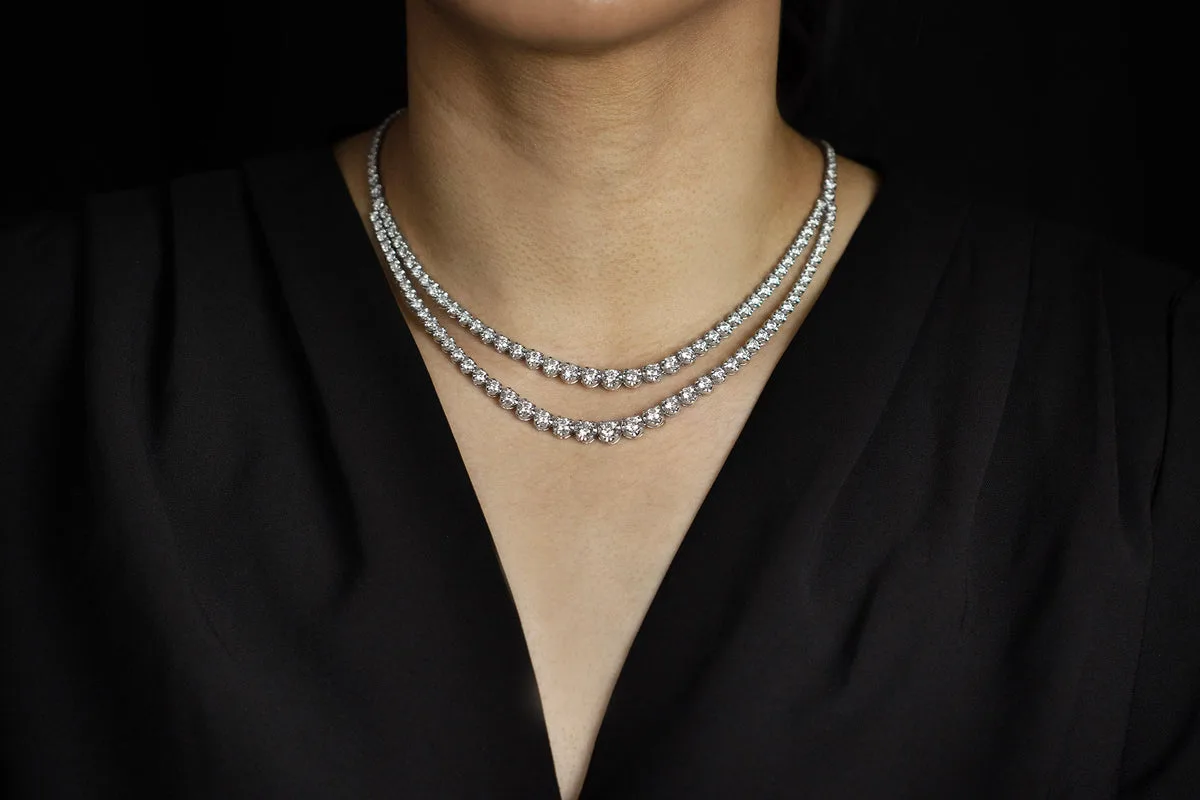
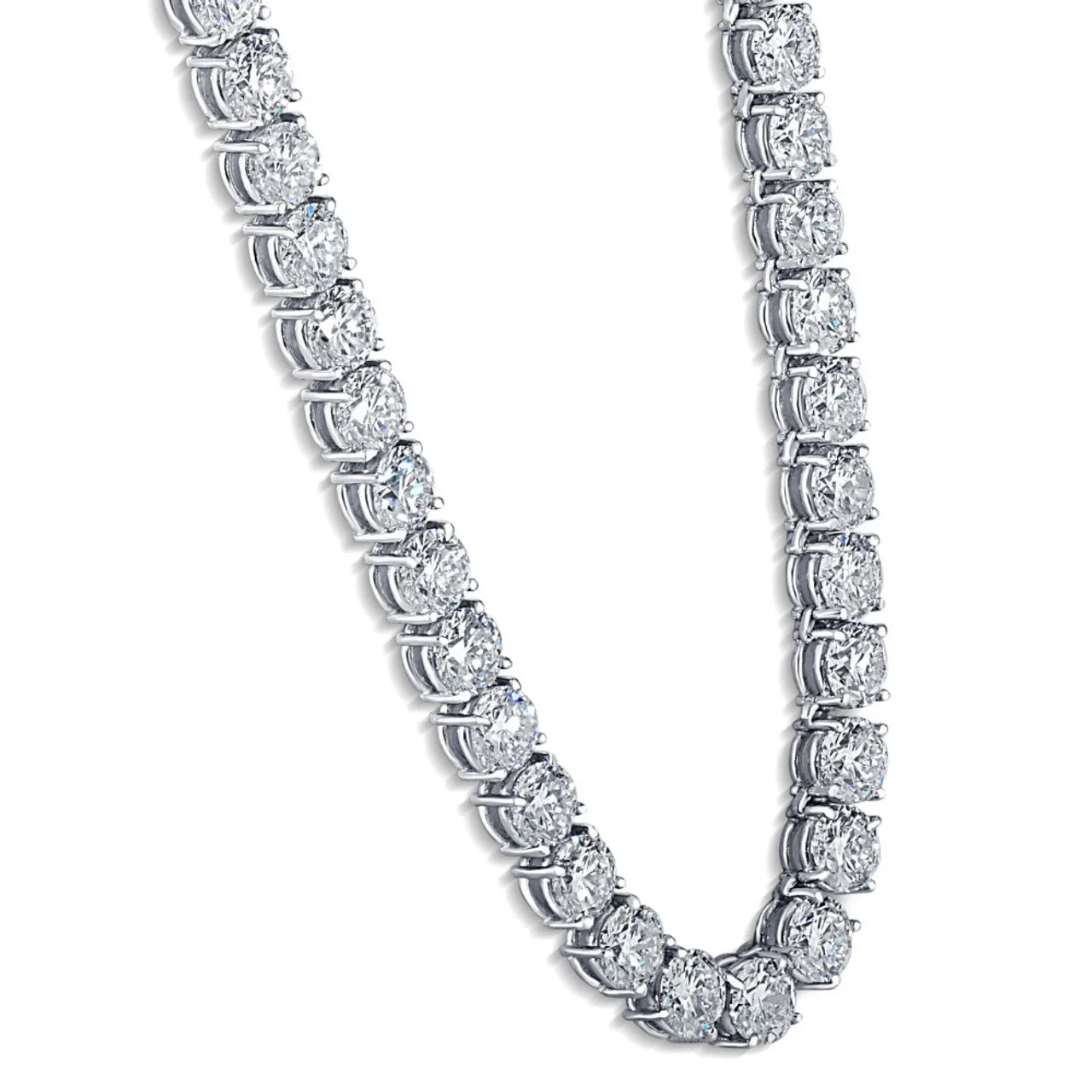
What defines a riviera, French for “river,” is graduation: the diamonds increase in size from the sides toward a larger center stone, rather than running uniform throughout the length, and that graduation is both the format’s defining feature and the reason well-executed pieces command a premium.
What is a riviera necklace?
A riviera necklace is a single continuous line of graduated diamonds, set so the stones increase in size from the clasp toward the center, with little or no visible metal between them. The name is French for “river”. The spelling appears as riviera, riviere or riviera; all three describe the same format, and what separates it from a plain line necklace is that graduation rather than any difference in setting.
Riviera versus tennis: the distinction that matters
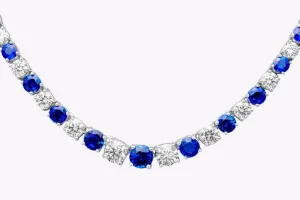
A tennis necklace sets diamonds of uniform, or near-uniform, size in a continuous line along its full length. A riviera necklace graduates: stones grow progressively larger toward the center front and taper back down toward the clasp. This is not a minor styling choice; it changes where the eye is drawn. A tennis necklace reads as continuous brilliance with no single focal point; a riviera necklace builds toward a clear center, closer in spirit to a single statement stone than to a repeating pattern. Legacy’s 30.81-Carat Sapphire & Diamond Riviera Necklace shows the format clearly, with the stone scale building toward the front center rather than repeating evenly around the neckline. Because the two formats share a family resemblance at first glance, both being continuous diamond lines rather than pendant-and-chain constructions, they are frequently confused in casual conversation, though a close look at the stone sizing along the length will always resolve which format a given piece belongs to. For collectors deciding between the two formats purely on total carat weight and price, our tennis necklace carat weight guide covers the uniform-line alternative in full.
The mathematics of graduation
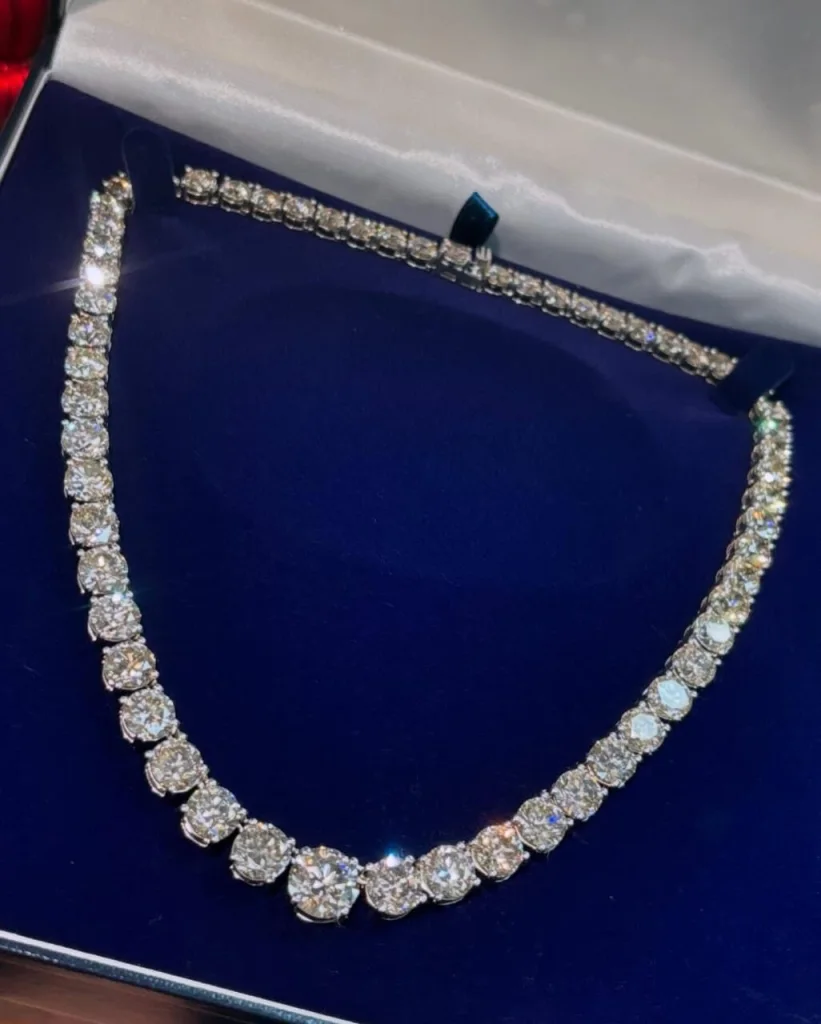
A well-executed graduated line does not jump abruptly from small stones to large ones; it steps up incrementally, stone by stone, so the transition reads as smooth rather than segmented. This requires sourcing enough well-matched stones across a continuous size range, not just a small stone and a large stone, but every size in between, matched for color and clarity so the graduation reads as a single coherent line rather than a mismatched assembly. This is measurably harder to source than a uniform tennis line, where every stone can be drawn from a narrower size band. It is a meaningful part of why riviera pieces, stone for stone, often involve more selection work than their tennis counterparts, even where the total carat weight is comparable.
The 50-carat-plus statement tier
At this tier, the graduation is less about subtlety and more about scale: the center stone is unmistakably the focal point, with the surrounding line built specifically to support and frame it rather than to compete with it. Pieces at this level are typically acquired as much for their standing as a defined, certified asset as for the occasions on which they will actually be worn, and valuation documentation tends to itemise the center stone separately from the graduated line for exactly this reason.
Colored stone combinations within riviera lines
Because the riviera format is built around a defined center and a supporting graduated line, it lends itself to combining diamonds with a colored center stone, sapphire, in the case of Legacy’s 30.81-carat piece, in a way that a uniform tennis line rarely does. The colored stone naturally reinforces the visual center that the graduation already creates, rather than competing with a line of uniform diamonds. This makes riviera a common choice for collectors who want a colored center stone but still want a continuous diamond setting rather than a pendant-style single-stone necklace. Ruby and emerald centers appear less frequently than sapphire within the format, generally because sourcing a colored center stone of sufficient size and quality to anchor a full graduated diamond line is harder for those stones, though bespoke commissions in either can be arranged on request.
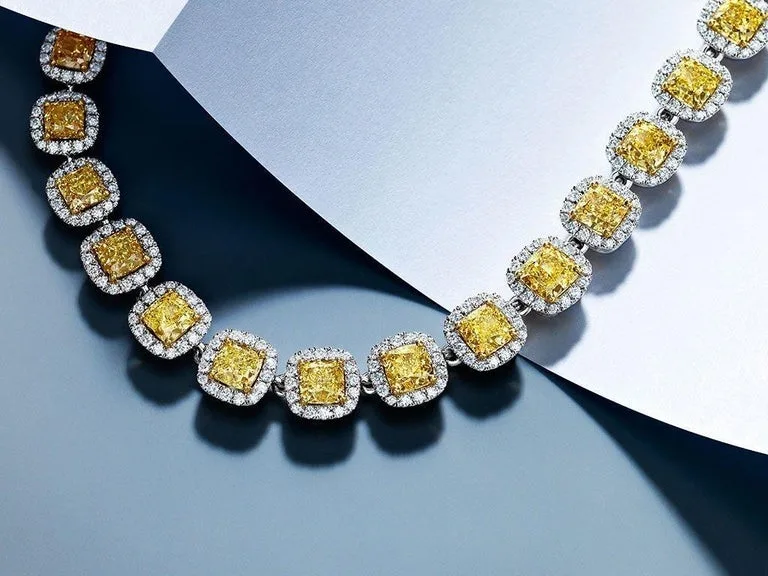
Metal and setting for a graduated line
Platinum and 18K white gold dominate riviera settings for the same reason they dominate tennis necklaces: a neutral, receding metal keeps visual attention on the diamond line rather than the mount. Because the stones vary in size along a riviera, the setting itself typically varies too, with slightly larger claws or collets around the center stones tapering to finer settings at the sides. This graduated setting work is a further reason riviera pieces demand more bench time than a uniform tennis line, since the setting cannot simply repeat the same specification along the full length.
Wearing and pairing a riviera necklace
Because a riviera necklace builds to a defined center, it is generally worn alone rather than layered with other necklaces, in contrast to a slim tennis necklace, which layers more readily since it lacks a competing focal point. It pairs well with a neckline that leaves the collarbone and upper chest visible, allowing the graduation to read clearly from center to sides rather than being interrupted by fabric. For evening wear where a single statement piece is wanted, a riviera necklace is often chosen specifically because it does the visual work that might otherwise require a necklace and a separate pendant.
Documentation for a graduated line
A riviera necklace is typically documented with certification for the center stone or stones individually, given their size and value, alongside a summary specification for the graduated line surrounding them. This split matters for insurance and resale: the center stone’s certificate establishes its own grading and value independently of the necklace as a whole, while the supporting line is valued on total carat weight and average grade. Every stone across Legacy’s riviera collection is independently certified by GIA, IGI or HRD, with the laboratory arranged on request, and buyers should confirm exactly how a given piece is documented before purchase, particularly at the collection’s upper tier where the center stone can represent a substantial share of the total value.
Questions collectors ask
What is the difference between a riviera and a tennis necklace?
A riviera necklace graduates in stone size, building toward a larger center stone and tapering toward the clasp. A tennis necklace runs uniform, same-size stones along its full length. The riviera format creates a defined focal point; the tennis format creates continuous, even brilliance.
Why are riviera necklaces rarer than tennis necklaces?
Building a smooth graduated line requires well-matched stones across a continuous range of sizes, not just a uniform batch; this is measurably harder to source, which is why the riviera runs far scarcer in Legacy’s collection than the tennis necklace.
Can a riviera necklace include colored gemstones?
Yes: sapphire is a common center-stone choice within a diamond riviera line, since the graduated setting naturally reinforces the colored stone as the visual focal point rather than competing with it.
Legacy’s current tennis and riviera collection and the wider necklace collection can be viewed with full certification and pricing on request. Every stone is independently certified by GIA, IGI or HRD, selected individually rather than from parcel lots, and delivered worldwide via Brink’s-insured shipping. Clients are welcome to privately suggest a price, arrange a private viewing in person or by live video, or book a private consultation to discuss graduation, center-stone scale and colored combinations for a specific piece. For necklaces at fifty carats and above, see our guide to diamond necklace prices at 50, 75 and 100 carats.
The Pieces in This GuideThe Vault →
From the Legacy vault — each one-of-a-kind, independently certified.
A private advisor answers on the figures in this guide — and places any piece from the vault within them, certificate first.
More from CollectingAll Guides →
 Diamond Earrings Price Guide: Studs, Drops, What They CostCOLLECTING · AUG 31, 2026
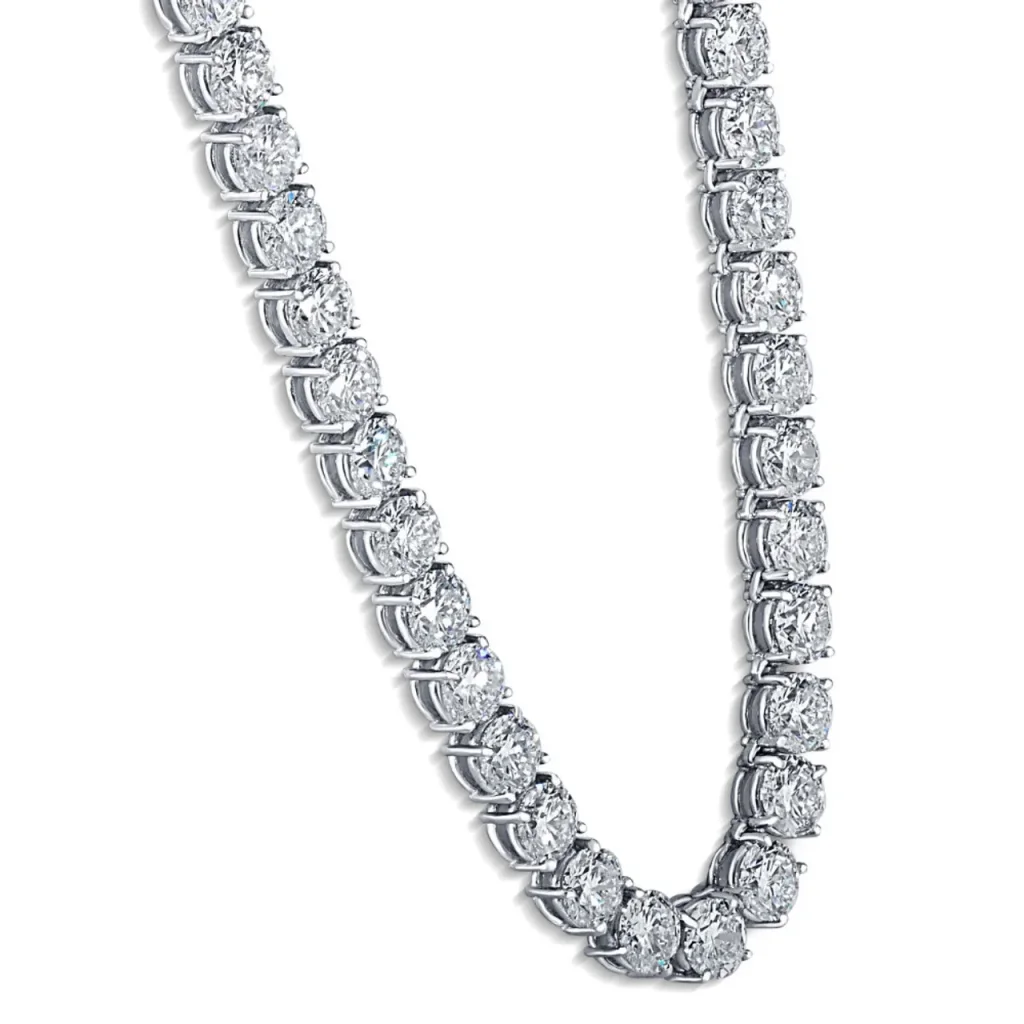 The Tennis Necklace: Carat Weight and ProportionCOLLECTING · AUG 21, 2026
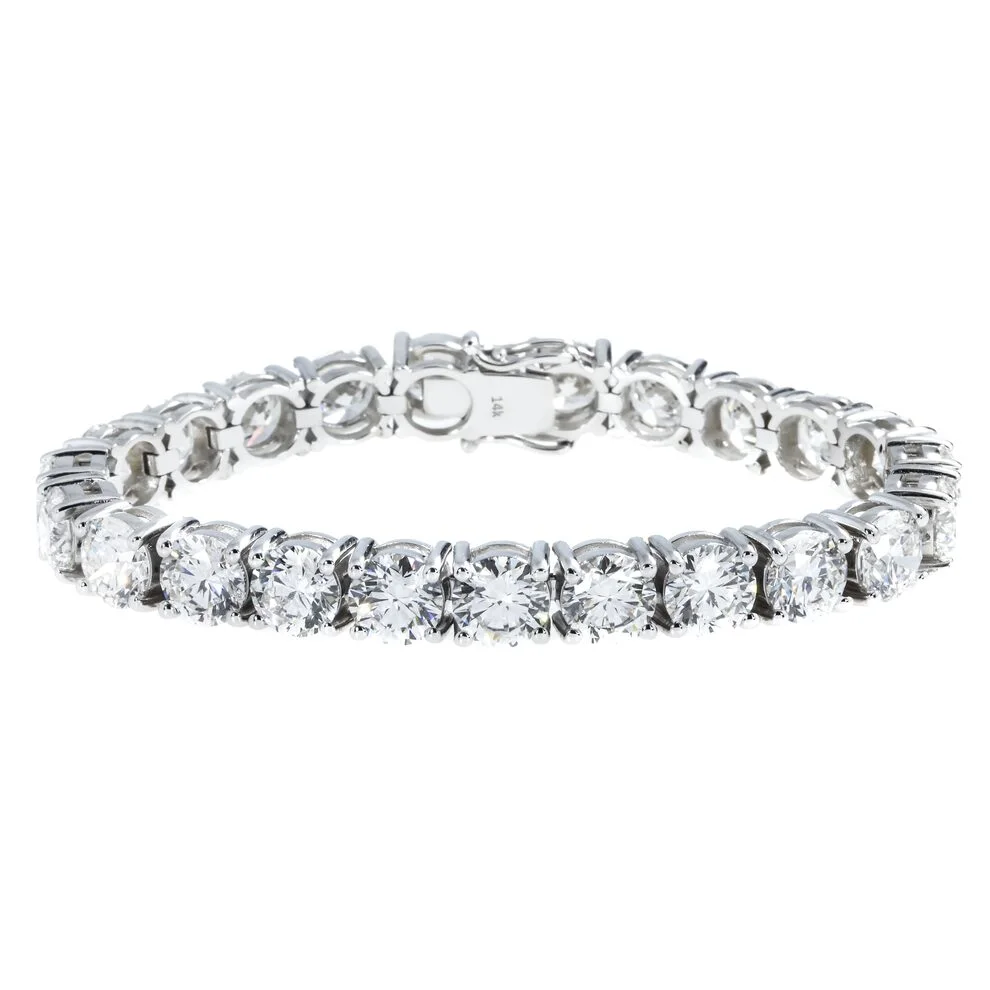 The Tennis Bracelet: A Buying GuideCOLLECTING · AUG 21, 2026
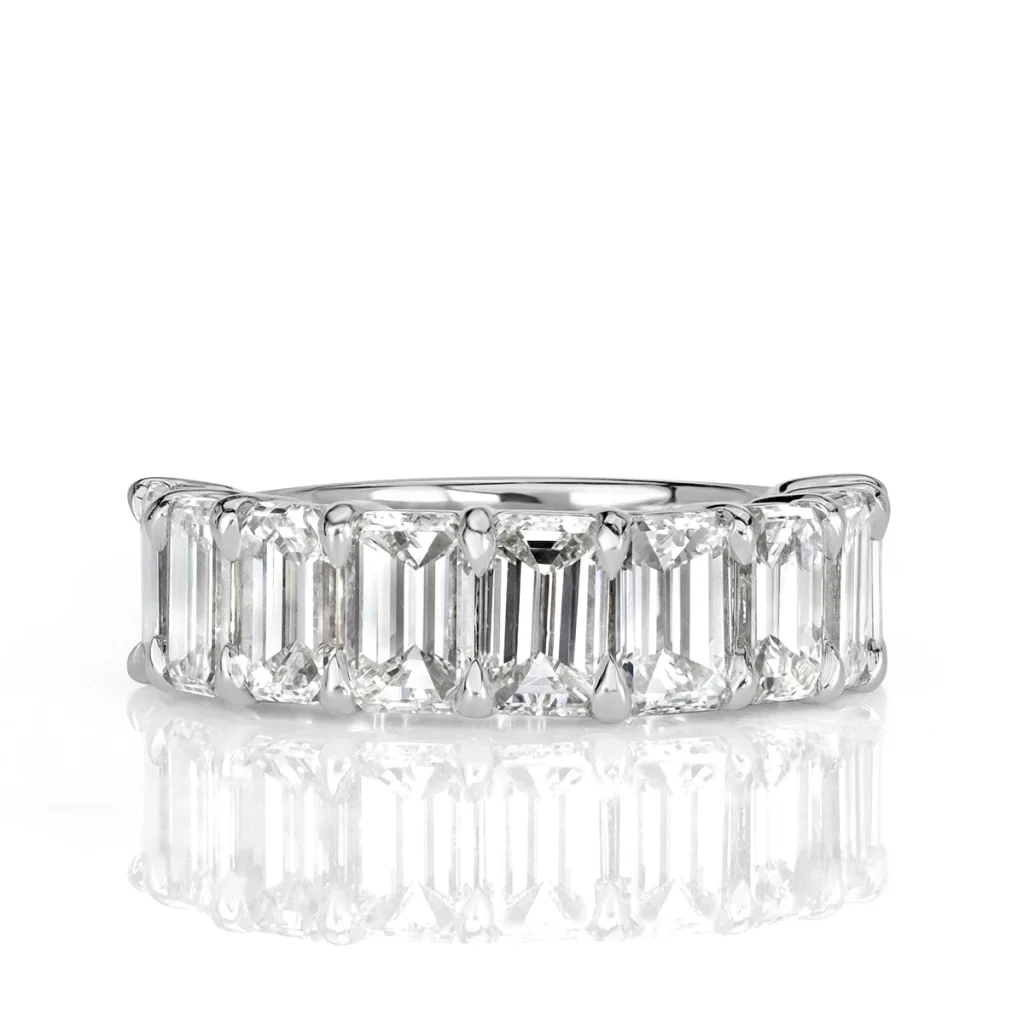 Eternity Rings: Full, Half and How to ChooseCOLLECTING · AUG 21, 2026Diamond Bracelets Beyond the Tennis Line: Formats and FitCOLLECTING · AUG 21, 2026
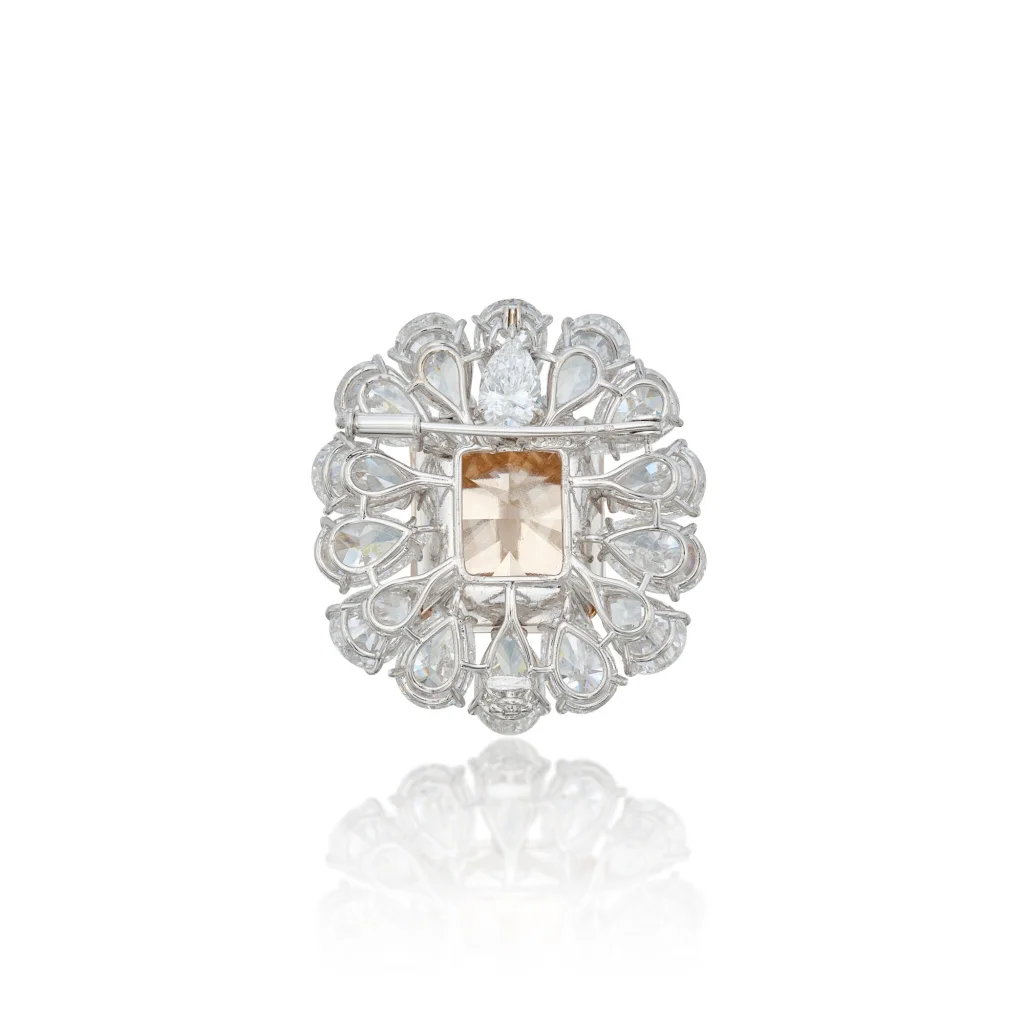 Collecting Diamond Brooches: The Most Undervalued Object in Fine JewelryCOLLECTING · AUG 21, 2026
The Vault, Continued
Every piece one-of-a-kind, every price published. Keep scrolling — the vault does not end here.